Signs of a Blown Turbo - Symptoms & What to Do Next

A turbo rarely fails without warning. In most cases, the car has been showing signs for a while, but they get put down to age, a sensor fault, a blocked DPF or just “it doesn’t feel as quick as it used to”. By the time it becomes obvious, the issue has usually been there for some time and the turbo has already started to wear or struggle.

The most common turbocharger failure symptoms and or signs of a blown turbo are loss of power, slow or delayed acceleration, blue or grey smoke from the exhaust, whining or siren-type noise under load, oil leaks, increased oil consumption and the engine management light coming on. What matters is how these show up together. One symptom on its own doesn’t always mean a faulty turbo, but when you have two or three at the same time, it usually points to a problem somewhere in the turbo system.

It’s also worth knowing that not every turbocharger symptom is actually a failed or bad turbo. Boost leaks, vacuum faults and blocked DPFs can give very similar signs, which is why jumping straight to replacing the turbo often leads to the wrong repair.

Loss of power

Loss of power is one of the most common signs of a bad turbo. The car will still drive, but it feels flat, especially when accelerating, overtaking, climbing hills or joining a motorway. It often feels like it’s holding back rather than pulling properly through the rev range. This happens when the turbo isn’t building the boost pressure it should. The engine is still running, but without enough compressed air it can’t produce the power it’s designed to. You’ll usually notice it more under load than around town.

If the turbo itself is worn or damaged, this can come from internal issues such as bearing wear, shaft play or a damaged compressor wheel. On many modern units, problems with the actuator or internal vanes will also affect boost control, and these are not typically replaced separately. In most cases, the turbo is treated as a complete unit.

At the same time, faults elsewhere in the system can give the same symptoms. Split boost pipes, intercooler leaks or air leaks in the system are common and need ruling out.

Slow or delayed acceleration

A healthy turbocharger should build boost smoothly as the revs rise. If the car feels slow to respond, takes longer to pick up, or only pulls properly at certain revs, something isn’t right. You might notice it feels weak low down and then suddenly comes in later than it should.

This usually means the turbo isn’t controlling or building pressure properly, which is a typical turbocharger fault symptom. That can be down to internal wear, sticking vanes or control issues affecting how the turbo spools.

At the same time, restricted airflow or exhaust flow will cause the same behaviour. Boost leaks, intercooler issues, vacuum problems or a blocked DPF can all slow the turbo down and affect how the car drives.

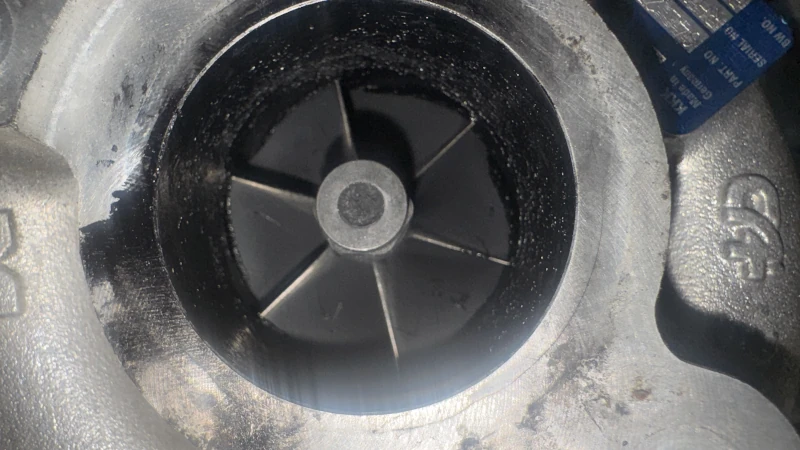
Clogged turbocharger

Oil contamination inside turbocharger causing turbo failure symptoms
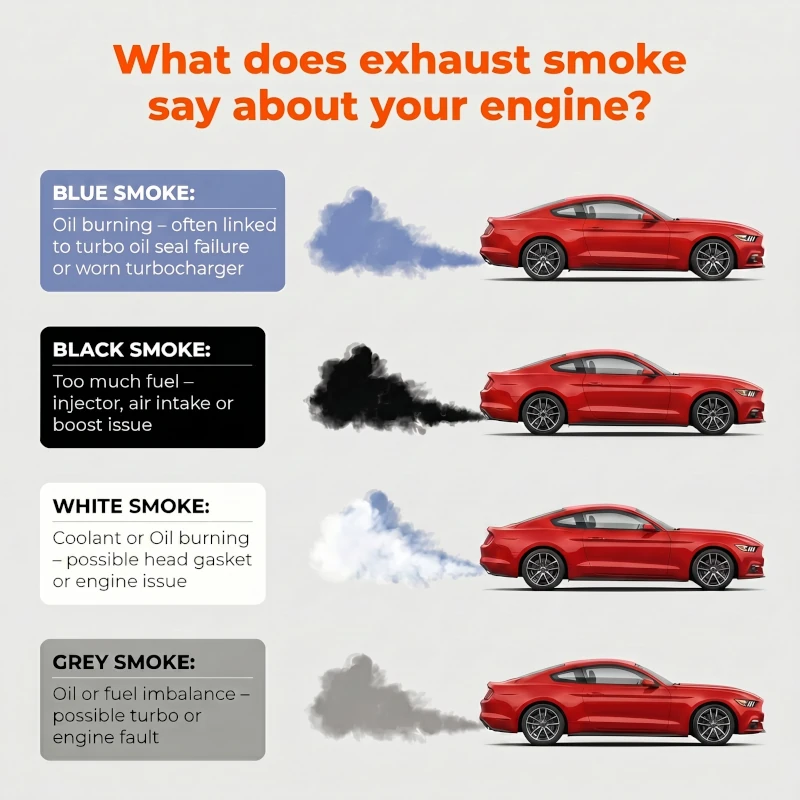
Blue, grey and black exhaust smoke caused by turbocharger failure

Blue or grey smoke from the exhaust

Blue or grey smoke is one of the more serious turbo failure symptoms. It usually means that oil is getting into the system and being burned. On turbo engines, that often points to oil getting past the turbo and into the intake or exhaust side.

You’ll normally notice it after idling or when you accelerate. It can also show when revving the engine or just after coming off boost. If it gets worse under load, that’s usually because the turbo is working harder and pushing more oil through.

Smoke on its own doesn’t prove that you have a blown turbo. We regularly see cases where the turbocharger gets blamed and the fault sits elsewhere. Worn engines, blocked breathers, restricted oil return, excessive crankcase pressure, DPF issues or even a problem with a piston ring can all produce similar symptoms.

If the turbo is leaking oil, the underlying cause still needs to be addressed. Otherwise, a replacement unit can end up doing the same thing again.

Whining, siren or grinding noise

A whining or siren noise under acceleration is one of the clearer signs of a failing turbocharger. It usually becomes more noticeable as the revs rise, especially under load.

A slight whistle can be normal, but if the noise has changed or become louder over time, it usually points to wear inside the turbo. This is typically caused by bearing wear or shaft movement. As the shaft wears, the turbocharger loses balance at high speed, creating that high-pitched noise.

If it develops into a grinding or scraping sound, the problem is more advanced. That usually means the shaft has excessive play and the compressor or turbine wheel is starting to contact the housing. At that stage, the turbo is already damaged internally and will continue to deteriorate quickly.

Engine management light

Modern engines constantly monitor boost pressure, airflow, exhaust pressure and turbo control. If something falls outside the expected range, the engine management light will come on.

Common faults include underboost, overboost, airflow issues and DPF-related pressure faults. You may also notice reduced power or limp mode.

The warning light doesn’t confirm a failed turbo. It simply shows the system isn’t operating correctly. Faults in pipework, sensors, vacuum supply, DPF restriction, EGR faults or turbo control can all trigger similar codes.

Reading fault codes alongside live data is what shows whether the issue is with the turbo itself or something around it.

Increased oil consumption

Increased oil consumption can point to a turbo problem, especially if oil is getting past the internal sealing system. You might notice the oil level dropping between services, oil in boost pipes, smoke from the exhaust or oil around the compressor housing.

A light oil mist in the intake system can be normal, particularly on higher mileage diesel engines. Heavy oil build-up or pooling is not normal and should be checked.

Low oil level is one of the quickest ways to damage a turbo. The shaft spins at very high speed and depends on a steady supply of clean oil for lubrication and cooling. Once that supply drops, wear increases rapidly.

Engine management light linked to possible turbocharger fault
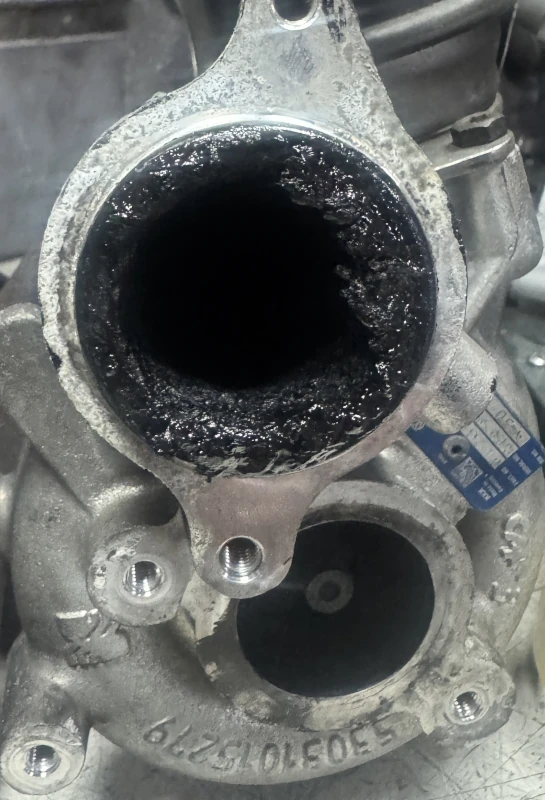
Oil build-up inside turbo inlet pipe caused by turbocharger oil leak

What actually causes turbo failure?

Most turbocharger failures don’t happen on their own. In many cases, the turbo is the part that fails, but not the part that caused the problem.

The main issues tend to come from oil supply, exhaust flow and general engine condition. Poor oil supply or contaminated oil will quickly damage bearings. Restricted exhaust flow, often caused by a blocked DPF, creates heat and back pressure that puts the turbo under constant stress. Air leaks and system faults can also force the turbo to work harder than it should.

Fitting also plays a role. Replacing a turbo without addressing the underlying issue is one of the main reasons for repeat failures. Oil condition, feed pipes, intake contamination and exhaust restrictions all need to be checked at the same time.

We cover these in more detail in our separateguide on turbocharger failure, including what to check before fitting a replacement.

Can you drive with a blown turbo?

In some cases, the car will still drive with a bad turbo, but that doesn’t mean it’s safe to keep using it. Just because it moves doesn’t mean the damage isn’t getting worse.

If the turbocharger is leaking oil, the engine can start losing oil over time. In rare cases, mainly on diesel engines, a serious oil leak can lead to the engine running on its own oil, but this is not common.

More often, internal wear leads to damage building up inside the turbo. If parts begin to break up, debris can pass through the intake or exhaust system and damage other components, including the intercooler, DPF or catalytic converter.

If there is heavy smoke, loud grinding noise, major loss of power or rapid oil loss, the car should not be driven unless absolutely necessary. At that stage, the turbo will usually need replacing, and it’s worth looking at the correct replacement turbocharger for your vehicle.
What to do next?

Don’t guess.

Start with a proper check of the system. Read the fault codes and look at live boost data so you know what the turbo is actually doing. This is where proper turbocharger diagnostics make the difference. From there, go through the basics properly - boost pipes, intercooler, vacuum supply, oil leaks, oil feed and return, and DPF pressure if the car has one. If you can get access, check the turbo itself for shaft play as well.

The aim isn’t just to confirm the turbo has blown, but to understand why. That’s where most people go wrong.

If the turbo has failed, the cause needs sorting before anything gets replaced. Otherwise you’re putting a new or remanufactured turbo onto the same problem that killed the old one.

A turbo will only last if the oil system is clean and flowing properly, the intake side is sealed, the exhaust can flow freely and the boost control is working as it should.

Product added to wishlist
Product added to compare.

We use cookies and similar technologies to improve your browsing experience, analyse traffic and measure website performance. With your consent, we and our partners including Google may use cookies and mobile advertising identifiers for analytics, conversion tracking and personalised or non-personalised advertising (ads personalisation). Learn more about how Google uses information from sites that use its services here: https://business.safety.google/privacy/