How a blocked DPF causes turbo failure

A blocked DPF can cause turbo failure by increasing exhaust back pressure and heat inside the turbocharger.

Most turbo failures don’t start with the turbo.

They usually start somewhere else in the system, and one of the most common causes is a blocked DPF that often requires proper DPF cleaning to restore exhaust flow. It gets overlooked because the connection is not always obvious. The car will often still drive, the turbo still builds some boost, and it gets put down to age or general wear.

But inside the system, things have already changed.

A turbocharger depends on exhaust gas flowing freely. That flow drives the turbine, helps control temperature, and allows the oil inside the core to cool and lubricate properly. When that flow is restricted, the turbo is no longer working under the conditions it was designed for.

That is exactly what happens when a DPF becomes blocked.

What actually changes when the DPF blocks

As soot builds up inside the DPF, exhaust gases can no longer pass through at the correct rate. Instead of flowing freely, they begin to slow down and build up behind the restriction. This creates back pressure and traps heat on the exhaust side of the turbo.

That combination of pressure and heat is what starts the damage.

Once exhaust flow is restricted, both back pressure and exhaust gas temperatures increase inside the turbine housing, and that directly affects how the turbo operates.

At first, nothing fails outright. The turbo still works, but it is under more stress than it should be. Response becomes less consistent, efficiency drops, and temperatures start to creep higher than normal.

Because this change is gradual, it often goes unnoticed until the damage has already started.

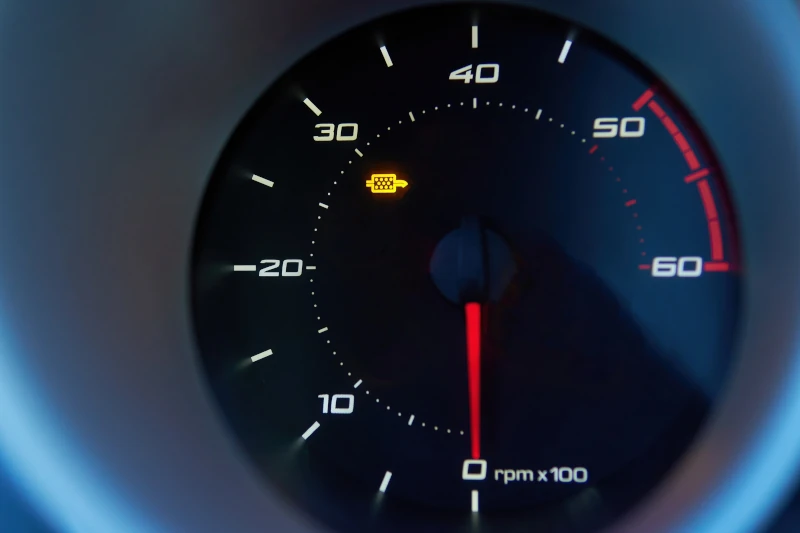
Blocked DPF warning light showing diesel particulate filter restriction

How heat transfers into the turbo core (CHRA)

The real damage starts once that heat moves beyond the turbine side.

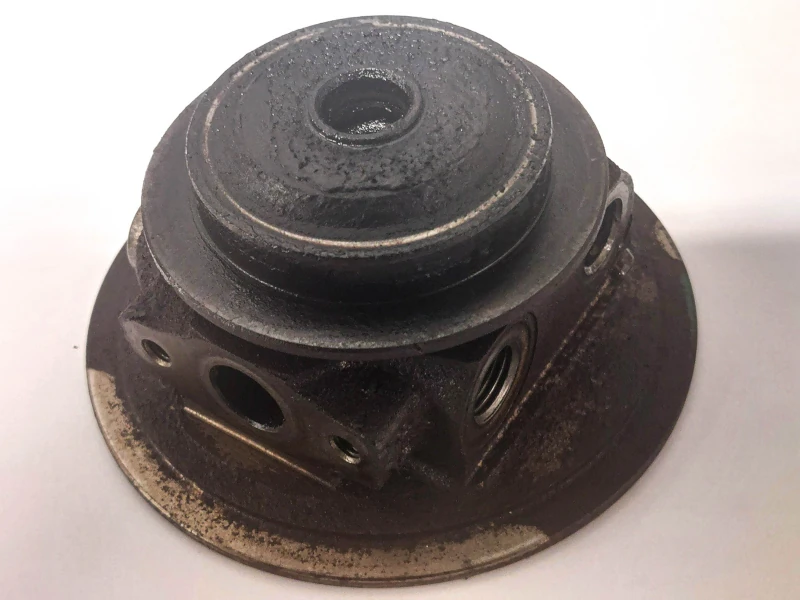
With increased back pressure, exhaust gases stay in the turbine housing longer than they should. That heat then transfers into the centre housing, the CHRA, where the bearings and oil system sit.

This is where things start to go wrong.

The CHRA relies on a steady flow of oil to lubricate and carry heat away. Once exhaust heat starts getting into this area, the oil cannot do that properly. It overheats, starts to break down, and in more severe cases begins to carbonise.

As that happens, oil passages start to restrict. Bearings lose proper lubrication, and wear speeds up quickly.

From the outside, this often gets blamed on oil issues. It can look like poor lubrication or contaminated oil. In reality, the oil system is reacting to excessive heat coming from the exhaust side.

Why oil leaks start to appear

As pressure continues to build, it does not just affect temperature. It starts to affect how the turbo seals.

Under normal conditions, the turbo’s internal seals keep a balance between exhaust pressure and oil pressure. Once back pressure rises beyond that balance, exhaust gas can start forcing its way past the turbine-side seals and into the core assembly.

When that happens, oil control is disrupted. Once exhaust gas gets into the CHRA, the pressure balance is lost and oil is forced in the wrong direction.

That is why blocked DPF cases often show oil where it should not be. You will see oil in the intake system, oil leaking from the turbo, and in some cases smoke that gets blamed on the turbo itself.

In reality, the turbo is reacting to the conditions around it, not causing the problem.

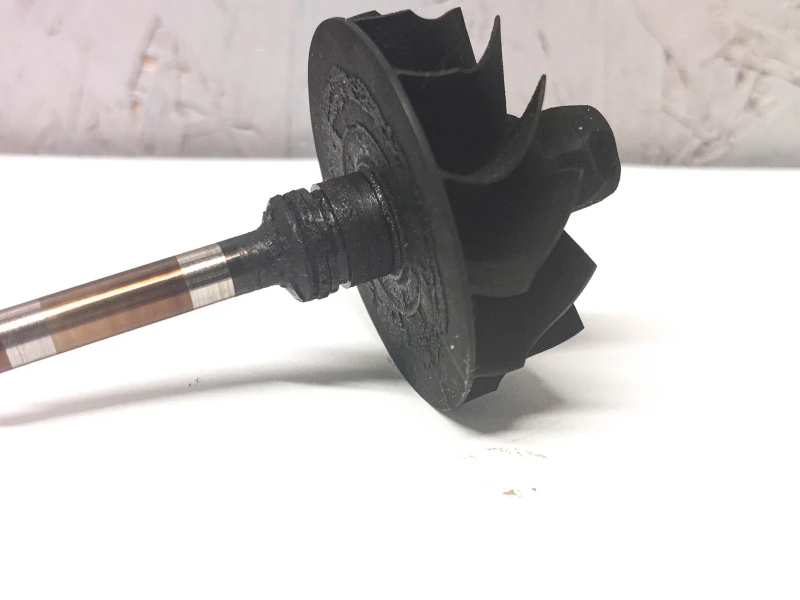
Turbocharger compressor wheel carbon build-up caused by blocked DPF

Carbon build-up and mechanical restriction

The extra heat and soot do not just affect the oil system.

They also start affecting the moving parts inside the turbo.

Where there are small clearances, such as in VNT mechanisms or wastegate linkages, exhaust gas and soot can get into areas they would not normally reach. Over time, this leads to carbon build-up inside those parts, which restricts movement and affects how the turbo controls boost.

Exhaust gas can be forced through even very small gaps, including VNT lever arm clearances, which leads to restricted movement and performance issues.

At this stage, the turbo is still working, but not properly. Boost control becomes inconsistent, response feels slower, and you may see underboost or overboost faults.

These symptoms are often treated as a turbo problem, when the real issue is still the restriction further down the exhaust.
Oil-contaminated turbocharger CHRA caused by DPF-related back pressure

Final stage: material damage and turbine failure

If the conditions continue, the damage goes beyond normal wear and turns into structural failure.

Constant exposure to high temperatures puts the turbine wheel under stress. Over time, repeated heat cycles weaken the material until it starts to crack or fail.

This kind of failure is a direct result of excessive exhaust temperature caused by restriction in the system.

By the time it gets to this stage, the turbo will usually need reconditioning or replacement. The problem, though, has often been there for a long time.

Why this gets misdiagnosed so often

One of the biggest issues with DPF-related turbo failure is how it shows up.

The visible symptoms such as oil leaks, bearing wear and poor performance all point towards the turbo itself. If exhaust flow or back pressure is not checked, it is easy to assume the turbo has simply worn out.

In reality, a lot of these failures are secondary.

Overheating inside the core and carbon build-up are often mistaken for oil-related problems. It gets blamed on lubrication, oil quality or contamination, when the real cause is excessive heat coming from a restricted exhaust.

That is why so many replacement turbos fail again.

Why replacing the turbo alone doesn’t fix the problem

If the DPF is still restricted, nothing really changes.

The new turbo is going straight back into the same conditions. The same back pressure, the same heat, the same restriction in the exhaust.

So the result is predictable.

It might feel better for a short time, but the underlying problem is still there. The new turbo is exposed to the same stress as the old one, and it will start to fail in the same way, often much quicker.

This is why the DPF needs to be checked and, if required, properly cleaned or replaced before fitting another turbo.

This is one of the most common repeat failure scenarios we see on diesel engines.

What this means in practice

A blocked DPF does not just affect emissions or fuel economy. It changes how the entire exhaust system behaves, and the turbo sits right in the middle of it. Once exhaust flow is restricted, temperatures rise, oil no longer behaves as it should, and internal components begin to suffer.

The turbo is usually the part that fails, but it is not the part that caused the problem.

A DPF takes time to become blocked, but once it does, it does not take long for the turbo to suffer. By the time clear symptoms appear, the damage has often been building for a while. Replacing the turbo without dealing with the restriction simply puts a new unit into the same conditions.

Most turbo failures follow the same pattern. They are not random, and they are rarely isolated. In many cases, they start with a blocked DPF, which is why proper turbocharger diagnostics is essential before replacing any parts.

Product added to wishlist
Product added to compare.

We use cookies and similar technologies to improve your browsing experience, analyse traffic and measure website performance. With your consent, we and our partners including Google may use cookies and mobile advertising identifiers for analytics, conversion tracking and personalised or non-personalised advertising (ads personalisation). Learn more about how Google uses information from sites that use its services here: https://business.safety.google/privacy/